Dog Separation Anxiety vs. Destructive Boredom — Two Problems That Seem Similar But Are Completely Different
Dog separation anxiety is an expression of extreme anxiety caused by separation from their guardian, while destructive boredom stems from a lack of energy and mental stimulation. This article precisely identifies the causes of problematic behaviors in dogs and offers practical solutions tailored to each situation. Many guardians worry about their dog's problematic behaviors, but behind these actions, there is always a message from the dog. In particular, separation anxiety and destructive boredom, which appear similar on the surface, have fundamentally different psychological roots, making accurate distinction key to finding effective solutions. According to veterinary behavioral research (Merck Veterinary Manual), separation anxiety is an expression of anxiety arising from an excessive attachment to the guardian, while destructive boredom originates from unspent energy and a lack of mental stimulation. By understanding this crucial difference, we aim to improve your companion dog's welfare and help you apply the correct corrective methods.

Care Guide
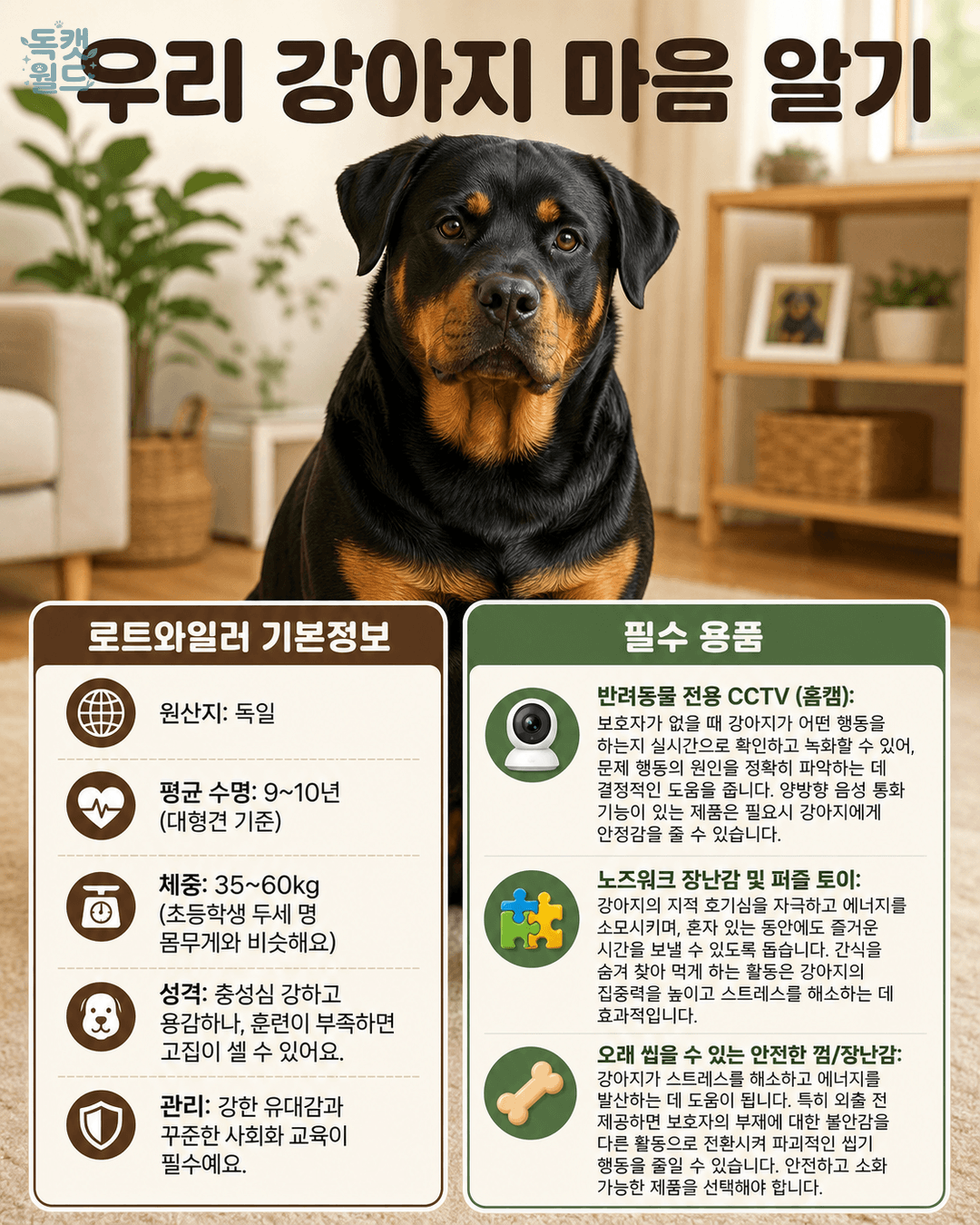
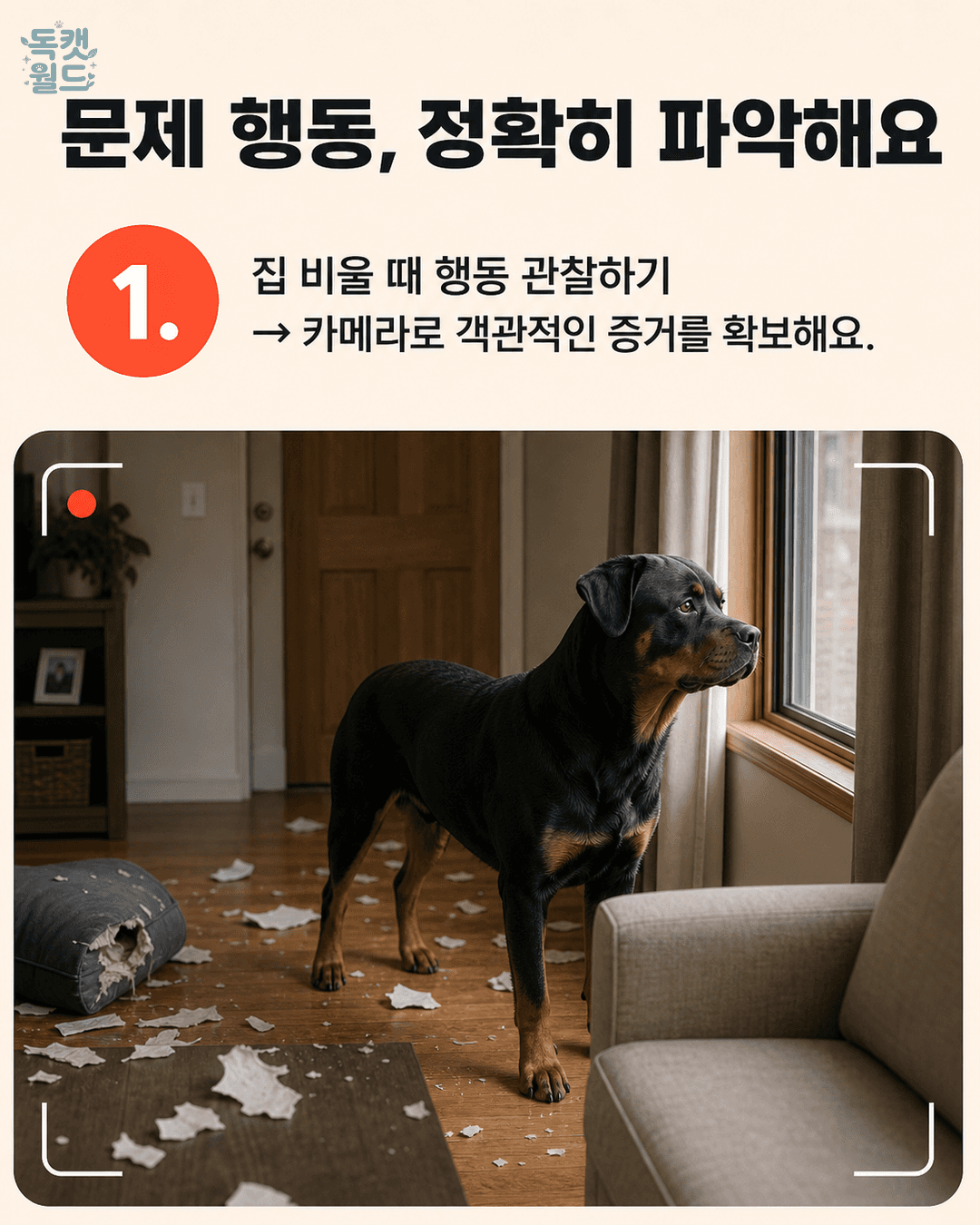
- 1Objectively observing your dog's behavior to pinpoint the exact cause of theproblem is paramount. When you go out, meticulously record the type, time of occurrence, and duration of behaviors your dog exhibits (such as barking, howling, destruction, house-soiling accidents, etc.). If necessary, it's advisable to install a home CCTV to directly observe what your dog does when left alone. This data provides crucial clues for distinguishing between separation anxiety and simple boredom, and serves as essential foundational information for developing problem-solving strategies.
- 2If separation anxiety is suspected, training to gradually foster your dog'sindependence is necessary. Begin by practicing leaving through the front door for very short periods (a few seconds) and immediately returning. Gradually increase the time you are away each time your dog can wait calmly. During this process, it's important to provide positive experiences to help your dog get used to being alone without feeling anxious, and to focus on teaching them that your departure and return are not special events.
- 3It is important to create an enriched environment so that your dog does not feelbored when left alone. Provide various types of nose work toys, puzzle toys, and chewable treats to encourage your dog to have an enjoyable time by themselves. These activities fulfill your dog's mental stimulation needs, help relieve stress, and are effective in preventing boredom that could lead to destructive behaviors. It's a good idea to rotate toys periodically to maintain their interest.
- 4Sufficient physical activity and mental stimulation are essential for healthyenergy expenditure and stress reduction in dogs. Take them for regular walks daily to help them release energy, and allow them to explore new environments and scents for mental stimulation. Additionally, engaging in activities with your dog, such as teaching simple obedience commands or tricks, strengthens your bond and satisfies their intellectual curiosity. If energy is not properly released, it is highly likely to lead to problematic behaviors.
- 5If your dog's problematic behavior is severe or if you find it difficult toresolve on your own, it is crucial to seek professional help. Consulting with a veterinarian or a certified professional dog behaviorist can help accurately diagnose your dog's condition and devise customized solutions tailored to their individual characteristics and circumstances. Expert intervention prevents the problem from worsening due to incorrect methods and significantly aids in improving your dog's behavioral issues more effectively and safely.
- 6It is advisable to maintain a nonchalant attitude when leaving, even if your dogseems anxious or bored. Showing excessive affection immediately before leaving or right after returning can make your dog perceive your absence as a more special and anxiety-inducing event. Develop a habit of leaving and returning quietly and calmly, and only initiate play or physical affection after your dog has settled down. This helps them understand that your coming and going are routine occurrences, which is effective in alleviating separation anxiety.
Pro Tips
It is highly recommended to install a CCTV or IP camera to accurately understand your dog's behavior when you are away from home. This goes beyond simply checking what your dog is doing; it provides objective data on when problematic behaviors start and what patterns they follow. This video evidence is crucial when explaining your dog's condition to a veterinarian or behavior specialist, and greatly assists guardians in analyzing the root cause of the problem and devising solutions themselves.
If your dog's problematic behavior is severe or confusing, it is essential to seek a diagnosis from a veterinarian or a certified professional dog behaviorist. Non-professional judgment can lead to misdiagnosis, delaying problem resolution and causing unnecessary stress to your dog. Experts comprehensively consider your dog's behavior patterns, psychological state, and health status to provide an accurate diagnosis and establish individualized training programs or treatment plans to effectively resolve behavioral issues.
In cases of severe separation anxiety, medication prescribed by a veterinarian may be necessary in conjunction with behavior modification training. Medication temporarily alleviates your dog's anxiety, enhancing training effectiveness and serving as an auxiliary tool to help your dog focus on training without stress. This is not a fundamental cure for behavioral problems and must always be used cautiously under professional guidance.
Providing your dog with a stable and predictable daily routine is crucial for enhancing their psychological stability. Maintain consistent feeding times, walk times, and play times as much as possible, and ensure consistency in your actions before and after leaving home. A predictable routine helps your dog anticipate what will happen next, reducing anxiety and contributing to the formation of trust that you will return even if you leave temporarily.
All training should be based on positive reinforcement.
This means immediately providing praise and rewards when your dog exhibits desired behavior to encourage its repetition. Especially praise them generously when they calmly tolerate being alone or enjoy playing with provided toys. Scolding or physically punishing your dog can amplify anxiety, harm the relationship with their guardian, and exacerbate behavioral problems, so it should be strictly avoided.